
Headgear selection should be viewed through a performance- and risk-management lens, not a preference lens.
The brain is the most sensitive structure in combat sports. Our independent impact testing at the Virginia Tech Helmet Lab confirms a consistent finding: headgear meaningfully reduces impact severity compared to no headgear.
However, protection and performance exist in tension. Increasing padding and protection typically has a negative effect on weight distribution, airflow, and visual field. Understanding these trade-offs is essential when selecting a design.
Cheek Protector: Superintending Exposure
The significant cheek-protector design stands as a speciality. It does not just serve as a safeguard prospect but extends its padding across the temple and cheekbone line, leaving a space open for the centerline.
At an impulsive level, this model depends on the prospect of impact absorption through a layered foam. Likewise, the padding feature extends its compulsion across the wider surface area and thus incurring a reduction of the peak impact to the regions which are covered while keeping in line certain aspects, namely:
-
Broader vision at a peripheral level
-
Airflow, which remains unrestricted
-
Natural ground of vertical sightlines
Understanding the Key Reasons
The nose, along with the central axis, remains exposed, with the defensive discipline feature remaining critical. It is this configuration factor that is being highly favoured by the athletes since it brings:
-
Speed in reaction
-
Facilitates tracking at a visual level
-
Realism spread through the technical sphere
These attributes stand significant and thus preserve the sustainability feature while driving ecological awareness and head mobilisation. However, it offers lower structural shielding to the centerline.
Face-Saver: Commencement through Structure
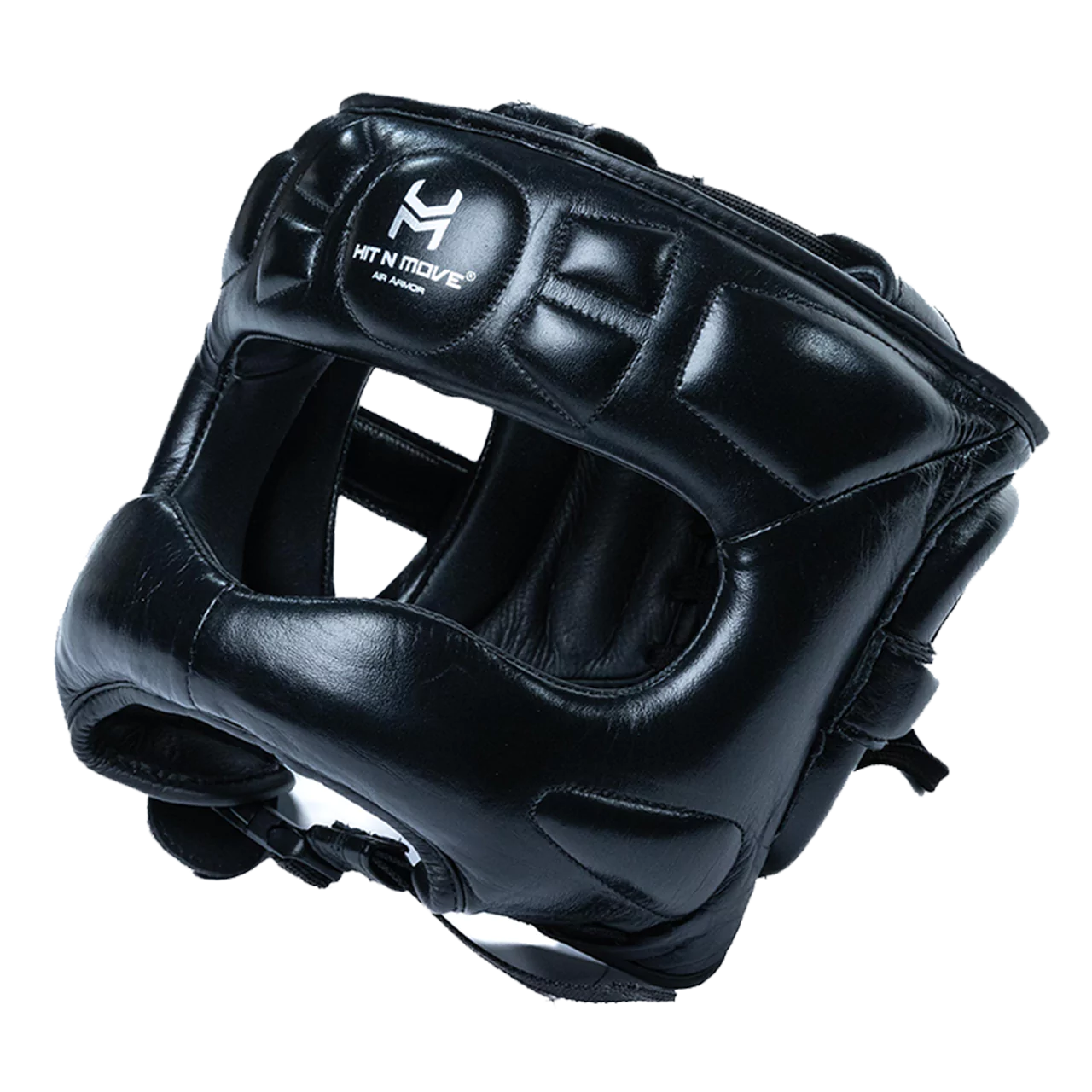
While considering the Face-saver designs, a simple frame or frontal bar is included to prevent direct contact between the upper lip and the nose.
Contrasting Faculty
While cheek protectors rely on primary absorption, face savers rely more on deflection mechanics. Thus, this structure intercepts the incoming force and redirects it through the outer shell and the core frame before it reaches the facial tissue. At a historic level, this has added to certain key considerations such as
-
Enhanced frontal mass
-
Key reduction of the airflow
-
A narrow level of visual windows
Safeguarding Factor: Understanding the advantages:
-
The athletes can manage the facial or even nasal injuries in a feasible manner
-
The environment is characterised by heavy-hitting training
-
Higher volumes of sparring phases are perceived
In this manner, the trade-off criteria have led to a significant reduction in field awareness while slightly altering head balance, while the design prioritised potential risk reduction while driving preservation.
Decoding Impact Defence: Absorption versus Deflection
The protection factor brings upon cheek protectors and a face saver mechanism.
Cheek Protectors Mechanism Factor:
-
It aims to distribute the pressure through compressible foam
-
It engages in maintaining a more realistic sensory feedback
Face-savers mechanism factor:
-
Redirecting the force through the significant structural
-
Incurring a reduction of the direct facial contact
In line with the variance factor, neither mechanism stands out as superior. Each of them mirrors a varied strategy of impact management.
Vision and Motor Response
The optical input tends to drive the key timing of reaction. On that ground, even a minor reduction in peripheral vision can affect defensive efficiency. The cheek protectors offer a wider visual field and spontaneously assist the:
-
Circumferential tracking
-
Feint identification
-
Awareness at a multi-angle level
Conventional face-savers narrow the lateral and lower visual ranges, while the central emphasis remains transparent. Furthermore, angle tracking might require more head movement. Likewise, the constraints of the visual ground affect movement patterns. Thus, in this event, the design factor affects protection and potential motor behaviour.
The Science of Load and Burnouts
While taking the weight distribution factor into consideration, the headgear mass stands effective. It engages in altering the load at the cervical zone along with neuromuscular stress. At this level, the mechanism of the cheek protectors is of core importance.
Factors to Consider:
-
Mostly lighter in characteristics
-
The weight is being distributed in an even manner
-
Promoting natural movement of the head
-
Allowing the wider and greater air flow
While considering the face-savers, here are the
Factors to Consider:
-
Attaching a frontal structure
-
Enhancing the anterior loading
-
Retaining more heat
A meagre difference in balance and weight can thus affect the potential reaction time in subsequent extended rounds.
Contemporary Engineering: Minimising the Trade-Off
Progress in materials science and structural design has reduced the compromises of history.
Newer headgear models can now provide, through improved shell geometry, micro-layered padding systems, and independent laboratory testing. These factors are considered:
-
High impact attenuation
-
Expanded visual fields
-
Reduced mass
-
Improved ventilation
This changes the discussion about whether to protect or perform to maximise both protection and performance.
Conclusion
Traditional headgear forced a decision between visual freedom and facial security.
Cheek protectors emphasised awareness and realism with partial coverage.
Face-savers emphasised structural protection at the expense of visual and weight compromises. The current engineering has been effective in reducing this lack observed.
Headgear should support both neurological safety and performance efficiency. The objective is not simply to absorb impact, but to preserve visual awareness, balance, and motor responsiveness while reducing injury risk.
Protection and performance are no longer mutually exclusive design goals.