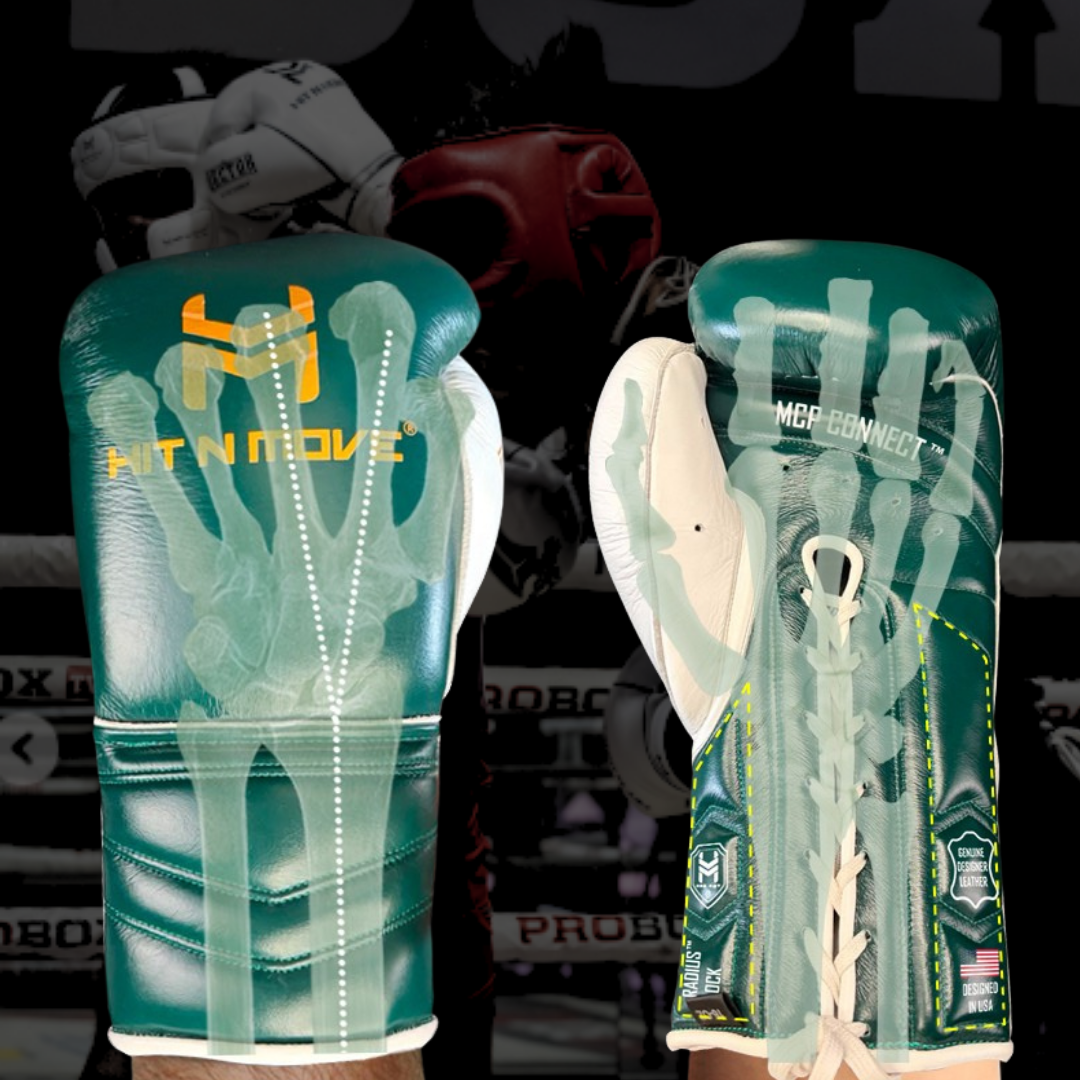

Exploring how the glove’s surface shapes the air around it.
How Does A Glove’s Build Affect Its Aerodynamics?
We believe airflow is influenced by the outer material, the padding beneath it, and how consistently the striking surface holds its shape.
So by studying the airflow around each glove, we could see how those construction differences affected airflow across the striking surface.
How We Tested It
The University of Maryland's Wind Trace test mapped airflow across the outer surface of each glove, creating a visible pattern of how the air travelled across it.
• An even, rail-like ridge = more consistent airflow across the striking area
• A pronounced V-shaped pattern = greater airflow variation across the striking area
More variation in the wind trace = more disrupted airflow = more energy wasted per punch.

What We Found
VECTOR™ produced a consistent, rail-like wind trace.
We attribute VECTOR™'s pattern to three things:
• Even padding density across the striking surface
• The natural texture of cowhide leather
• The laminated leather’s resistance to deformation
The test also showed that our genuine Turkish cowhide allowed air to move smoothly across its natural surface.
How It Shaped VECTOR™
The results supported two parts of VECTOR™ already under development:
1. Consistent padding density developed for the new 6-layer construction
2. Laminated genuine cowhide, combining its natural surface characteristics with added structural stability
The wind trace gave us a new way to verify that both were working together to create a consistent striking surface and smoother airflow across it.